Hillforts, rampart by rampart.
The great earthworks of Britain and Ireland: who built them and when, how ramparts, ditches and gateways worked, what life was like inside, and where to see them. Every fact is checked against English Heritage, the National Trust, Historic Environment Scotland, the Atlas of Hillforts and other sources, and where sources disagree we show both.
The short version
Hillforts were mostly built in the Iron Age: the oldest date to around 1000 BC and the most recent to about AD 700. University of Edinburgh: Atlas of Hillforts of Britain and Ireland site launched Hillfort building began across Britain over 2,600 years ago, perhaps marking the rise of larger tribal groups ruled by new elites. English Heritage: History of Maiden Castle
Despite the name, not all hillforts are on hills, and not all were forts in the military sense. University of Edinburgh: Atlas of Hillforts of Britain and Ireland site launched Many may have been regional gathering places for festivals and trade, and some are on low-lying land. University of Edinburgh: Atlas of Hillforts of Britain and Ireland site launched
A hillfort with several ramparts is called “multivallate”, meaning multiple ramparts. English Heritage: History of Old Oswestry Hillfort A “univallate” fort is a hilltop enclosure with a single rampart, a ditch and a low counterscarp bank. National Trust: History of Cissbury Ring
Ramparts were formidable obstacles, but they may also have been built for display, showing off the power of the people inside. English Heritage: History of Old Oswestry Hillfort
Start exploring
Rings of ramparts
Old Oswestry has five sets of ramparts, the outermost being the newest; in places they are over 6 metres high. English Heritage: Description of Old Oswestry Hillfort Entrances began as simple gaps but were rebuilt into long entrance corridors, so people coming in could be watched. English Heritage: Description of Old Oswestry Hillfort
And people lived inside
A community of 300 to 400 people lived at Danebury for more than 400 years. Hampshire County Council: Danebury Iron Age Hill Fort Local Nature Reserve At Uffington, each large round hut probably housed an extended family. English Heritage: History of Uffington Castle, White Horse and Dragon Hill More on life inside a hillfort.
Enjoying the hillforts? Help keep the lights on.
This site is hand-built, fact-checked and free to read. If a fact, a game or one of Useless’s notes made you smile, a little support keeps it going and helps the network grow.
Hillfort printables
Fact-checked PDFs in A4 and US Letter, for KS2 classrooms, ages 11 to 14, families and hillfort visitors.
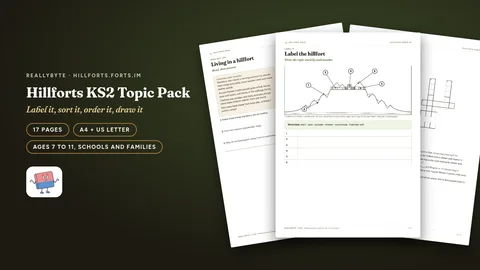
Hillforts KS2 Topic Pack
Ages 7 to 11, schools and families
Label a hillfort, Iron Age or not sorting cards, a hillfort timeline, a crossword where every answer is a real fact, a word search, a comic strip, a roundhouse to colour, a certificate and a full answer key
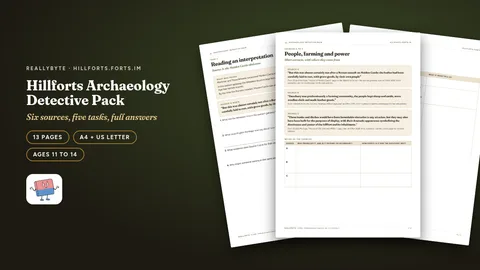
Hillforts Archaeology Detective Pack
Ages 11 to 14
How archaeologists read a hillfort: digs at Maiden Castle, Danebury and Old Oswestry, an evidence table, short sources with their provenance, questions that experts still cannot answer, and a judgement task, with full answers
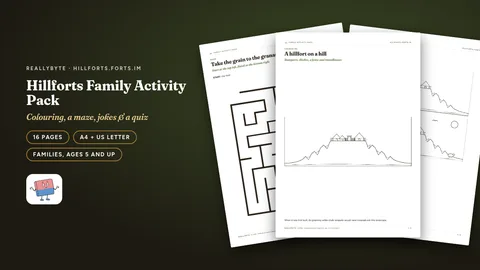
Hillforts Family Activity Pack
Families, ages 5 and up
Colouring pages, a hillfort maze, spot-the-difference, design your own hillfort, Useless the Eraser’s hillfort jokes and a 20-question quiz to do together
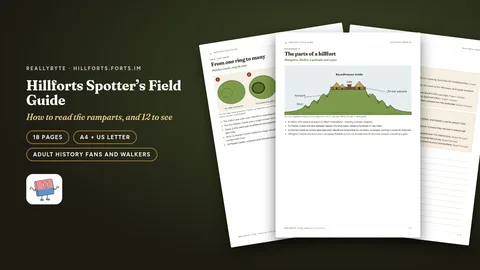
Hillforts Spotter’s Field Guide
Adult history fans and walkers
How to read ramparts, ditches and entrances, univallate and multivallate forts, 12 hillforts in England, Wales and Scotland with what their keepers say, and a checklist
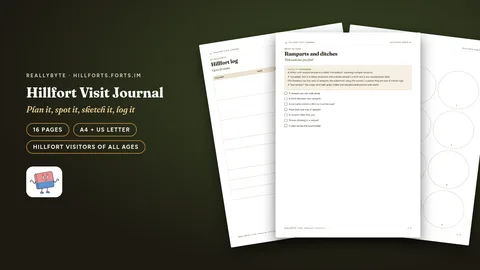
Hillfort Visit Journal
Hillfort visitors of all ages
Before-you-go checklist, what-to-spot tick lists for ramparts, ditches, gateways and roundhouse platforms, sketch pages, a log for up to 12 visits, and a visit stamps page
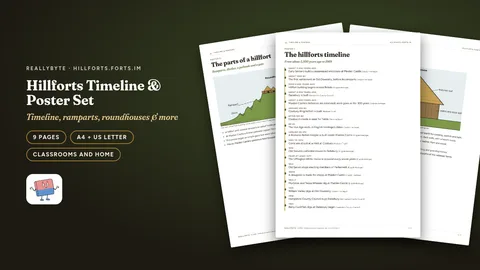
Hillforts Timeline & Poster Set
Classrooms and home
Six poster pages: a timeline from 5,500 years ago to 1969, the parts of a hillfort, how a big hillfort grew, life in a roundhouse, hillforts across Britain and Ireland, and hillforts in numbers
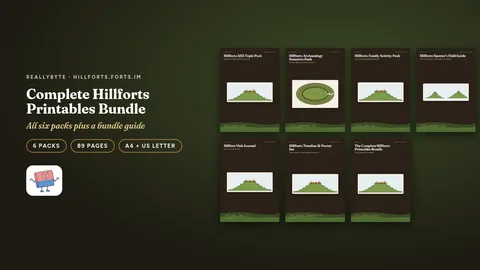 Best value
The Complete Hillforts Printables Bundle
All six packs plus a bundle guide, A4 and US Letter, in one download. $12.99 instead of $26.44 bought separately.